Tag: technology

  • Load shedding: Forcing the township economy to go international?

    Load shedding: Forcing the township economy to go international?

    While the protests in 2021 were expected to bring the Kasi economy to its knees, quite the opposite happened. Entrepreneurs who had cut their innovation ‘teeth’ during Covid faced the new challenge head on.

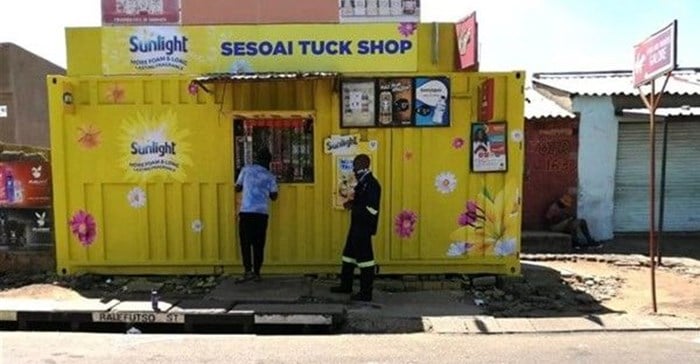
    Township delivery networks sprang up, filling the gap that Mr. Delivery was struggling to fill. Spaza shops went from strength to strength. New eateries sprang up, mimicking those found in the affluent parts of Jo’burg. These, and many other innovations provided a foundation for big brands to partner with entrepreneurs in new and exciting ways.

    Load shedding in real numbers is devastating

    However, the fairytale has been short-lived. According to a recent News24 article, since Eskom has stepped up its load shedding schedule, 66% of township businesses have had to cut jobs, with 60% unable to operate during load shedding hours.

    The implications are massive. Not only does the township economy contribute 5.2% to South Africa’s GDP, but it also employs over 2.6 million people. Load shedding in real numbers is devastating.

    Hyper-local brands

    The township economy is also built partially on a reawakened love of local brands. We’re not talking South African brands (although that’s a thing too), we’re talking hyper-local brands. As in, something your neighbour makes.

    This serves to keep cash circulating within the township, which means that one transaction enriches a long line of people, all living around you. One of the measures of a community’s wealth is the lifespan of cash within that community before it exits into the world.

    With a load shedding economy, township residents with money to spend will have to look outside the township for premium goods and luxury experiences. It’s a double whammy when load shedding and a fairly closed consumer ecosystem come to blows. Load shedding always wins.

    The one saving grace

    One saving grace is that with an increase in internet availability and a high unemployment rate, many are turning to web-based businesses to generate an income.

    According to the World Bank, a growing body of research shows that access to Wi-Fi has a positive effect on an embattled economy by providing access to global markets.

    Are global markets hungry for South African products? The international success of Maxhosa Africa proves that.

    With higher demand, stronger international currencies, and a hungry populace, the Kasi economy may be saved after all.

    We live in hope

    When it comes to things like fashion, we have the government to thank for where we are today. Nearly 15 years ago, the government instituted ridiculously high import duties on clothing in an effort to curb the influx of cheap brands from China.

    The plan was to stimulate the local fashion economy and it seems to have worked. What needs to happen next is the cutting of export taxes to support township entrepreneurs. While it would serve the country to lower both these (and other taxes), there’s been no word as to whether this will happen.

    How does this affect marketers? Well, should South Africa begin exporting locally made items (like fashion), in bulk, we may need to start understanding the international consumer a lot more. We live in hope.

  • Shifting retail habits in SA consumers

    Shifting retail habits in SA consumers

    Marketing influences and retail habits are shifting in the pandemic, and in South Africa’s townships, cash and printed marketing messages still count. These observations are from the 2021 South Africa Township Marketing Report with Rogerwilco and Survey54, which looks at the factors that influence consumer’s decisions in the township environment.

    Cash is still king

    South Africans still carry cash, with a whopping 80% of respondents preferring it over other payment methods. There are two strongly held beliefs here: firstly, bank charges are way too high (not entirely true). Secondly, cash is untraceable, so the taxman won’t take it from you. Abdullahi Ibrahim, treasurer of the Somali Community Board of South Africa, whose organisation represents the interests of many spazas and informal traders, maintains that a majority of his members would prefer if their customers paid with cards or e-wallets.

    With many respondents using their bank accounts only two or three times a month to withdraw their salaries, there are people out there walking around with fairly substantial sums of money in their pockets. Not ideal for them, not ideal for traders. Breaking the cash habit is going to be hard work, but there are benefits for both the retailer and the consumer.

    Retailers: 1, Spaza’s: 0

    Spaza shops have been a mainstay in townships since the 1970s, and while they are still a go-to shopping choice, their popularity is declining. COVID-19 has exacerbated existing issues that consumers face when shopping at a spaza shop. Price has always been a consideration, but many consumers are willing to pay the higher price in exchange for the convenience of having a friendly neighbourhood store. Expired stock is also a long-standing issue, made worse by less foot traffic during COVID-19’s lockdowns.

    These problems have caused the township consumer to re-think their loyalties, and retailers are shifting up the preferred shopping list. The fall of the spaza could be detrimental to SA’s economy, with spaza’s contributing 5.2% to SA’s overall GDP and offering employment to 2.6 million people.

    The opportunities are endless here, but one that springs immediately to mind is a white labelled loyalty programme that could bring the township resident into the loyalty cycle while providing a secure future for the local spaza shop.

    Marketing influences

    The last point I’d like to touch on is our respondent’s most trusted sources of product information. Advocacy from friends and family is number one. A good rule of thumb for marketers is this: you’re not talking to an individual, you’re talking to a family. There is an ecosystem there and getting your brand into those conversations is going to require an understanding of all its participants. In second place (and maybe surprising for some) are newspaper inserts. Many marketers are turning to social media to reach this market, but the sweet spot still lies in print.

    There are many other topics, ranging from attitudes towards fake goods, ecommerce, and side hustles. The takeaway here, is that if this is your audience, you may know less about them than you think.

  • Retail futures from Google Marketing Conference

    Retail futures from Google Marketing Conference

    Google recently aired its Google Marketing conference. The event was a detailed look at the future of online retail, finance, and advertising. Insights, there were aplenty. I’ve taken some notes, focusing on the future of retail. I highly recommend that you go and watch the videos yourselves, there’s a lot of food for thought in them.

    When COVID-19 kicked off, there was a lot of speculation around the ‘new normal’, what trends would remain, and what trends wouldn’t. Here we are, a year later, and there appears to be some stickiness on some of those trends. The retail team at Google has started examining these trends more closely.

    Unpredictability

    Sales will remain unpredictable – 15% of all Google searches are new. People are spending more time at home, and with that comes certain behaviours. I know, as I’ve been spending a lot of time in my study, using it as my office. I’ve had to get a second screen, increase my desk space, and organise a bundle of cables leading out of the various PCs that I own. I wouldn’t have been bothered by any of this if I wasn’t spending so much time in this room. The thing is, this behaviour is completely unnatural for me. If you told me a year ago that I’d be buying leather chairs to turn the spare room into a library, I’d tell you that you’re mad. It turns out that my forays into interior design and neatening up my spaces are not unique to me.

    There’s also been an increase in clothing sales of tops, but not bottoms. How many of us are sitting in pyjama pants right now? The fact that 15% of Google searches are new, means that people are starting to think differently. They’re looking for inspiration, for ways to make their lives better in the new context they find themselves in. We’ve never seen this before. Sales have become unpredictable.

    Convenience

    Consumers have three big priorities. Stock and delivery times are the first two. If your business is struggling to keep stock or your delivery times are not great, you had better fix that. Those two issues are damaging your brand, which in turn will damage your repeat business (and perhaps even new business if word gets out). We’ve always known that people have an affinity towards brands that share their ideals.

    The third consumer priority takes this into account. As part of this drive towards convenience, consumer searches show a 71% increase in usages of terms like “sustainable”, “ethically sourced”, etc. This has always been a background trend, but it is becoming more prominent and I am aware of several businesses that have taken note and are beginning to take sustainability a lot more seriously.

    Data

    Data has always been important, we know it, and many of us spend a lot of time looking at it. But how we use data needs to change. Sajal Kohli, senior partner and head of global retail at McKinsey has said that businesses need to gear themselves for “much shorter planning horizons”. So, if you’re planning your business activities on a one year timescale, you need to stop. Start planning your launches, promos, and campaigns on a quarterly or even monthly time frame. The data is there and you have the insights. Your business needs to become far more agile to account for the unpredictable environment we find ourselves in.

    This should have been the approach to business the moment we had access to the volumes of data that we have access to. But for some reason we stuck to our old ways. Covid is forcing our hand and we need to adapt quickly.

    Loyalty programmes

    I’ve talked about loyalty programmes before in this forum, so I’m not going to go into this in too much detail. The bottom line is, have a good one, and make retention and repeat shops a priority.

    I know that the ‘new normal’ conversation has been done to death. I’m also aware that a lot of the stats I’ve presented above are US-based. I don’t think it matters. This isn’t about Covid, this is about solid retail business practices. The things that the team at Google are telling us, are not new and wonderful insights. We’ve known these things all along.

    Be agile, focus on data and insights, and put your customer first. These conversations have been around for years. Covid or no Covid, the pressure is on, and we need to start putting these principles into play.

  • Gimmick or revolution – what does VR really bring?

    Gimmick or revolution – what does VR really bring?

    In the winter of 1982, my father brought home our first computer, a BBC Model B microcomputer. The BBC Micro was a basic 8 bit machine running a 2 MHz 6502 processor with 4 channel sound and the ability to output 8 colour graphics at a dismal resolution. By today’s standards, it’s awful. But in 1982 it was mind-blowing. As the name suggests, the BBC micro was commissioned by the BBC as a learning tool and it even got its own TV show. More importantly, it was rolled-out across most schools in the UK as part of a digital education programme. The BBC Micro pioneered a lot of things, both technical and cultural.

    Inevitably, its popularity waned. One of the big reasons? It failed to meet the expectations of the working world. While it was great for learning and understanding computers, it had very little to offer in the way of spreadsheets and word processors. When the PC/Mac came along with all of these wonderful things, adoption rates shot up, and soon there was a PC in almost every office and household. New technology is driven by adoption, adoption is driven by big business. Until that journey from rags to riches is undertaken, tech will often sit in a world of obscurity, becoming yet another artifact of failed innovation.

    That brings me to the subject of VR, a technology that’s been around for almost a quarter of a century. Why has it taken so long to gain traction? Where is the rags to riches story? Is it just a gimmick? Things are starting to change from a sales POV. Sony’s answer, the PSVR, has enjoyed some popularity. Facebook’s Oculus range has also seen a significant rise in sales (especially with the release of the Oculus Quest 2). Unfortunately, both these headsets are still sitting firmly in the realm of the ‘experience’ (read: gamer), so how useful are they as an office productivity tool. The answer is, they’re not. Not yet.

    What has stood in the way? Portability for one thing. VR headsets plug into big, powerful computers so that video games can have a very deep sense of realism. Because there’s been such a heavy focus on gaming, there has been very little thought given to standalone units. That has changed and there are several options available for those of us that don’t have the big, expensive consoles and PCs. But it also means that an office environment won’t need a ton of extra gear lying around to unlock the power of VR.

    I think the biggest issue right now is imagination. There are many updates and peripherals that seek to replicate the office experience in the VR space. Physical keyboards that magically appear on virtual desks are one such product. Virtual offices are a great idea. You can have as many screens as you like, you can set up your office in any virtual location, from the beaches of Rio to the Swiss Alps. But what is the point? How is that innovation? On the job training has been pushed as another ‘killer feature’. Once again, not particularly interesting and would unlikely be the big driver adoption.

    True innovation

    An example of true innovation would be creating virtual workspaces where team members can collaborate on products in a single, interactive ‘playroom’. Need to build an activation stand for a product? Workshop it with your team in a collab space. Create the experience virtually, add ideas, sketch out collateral, and experience it as the consumer would before it even goes into production. We could be creating massive, fully interactive ideation spaces that shift from idea to prototype to production in one space, with one team. Everything from building code to planning logistics to creating better experiences would go from being an endless stream of emails and powerpoint documents to a single, virtual space. The days of endless emails would disappear.

    The same principle could work for the consumer. Imagine purchasing furniture by bringing virtual couches into a virtual representation of your lounge. Imagine trying out your next big screen TV in the comfort of your home before ordering. Imagine following along while a virtual chef shows you how to make an amazing dish before you’ve even ordered the ingredients.

    Will this happen? What does it mean for you? If history is anything to go by (and it always is), as soon as VR gets adopted by big business, it’s going to be a big thing. The way the new headsets are going and the updates that are currently being rolled out, we’re going to see that kind of adoption in the next three to five years. Right now, keep an eye out, because mass consumer adoption will mean a fundamental change in how people shop for things. You might want to be prepared for that.

  • Working from home’s impact on innovation

    Working from home’s impact on innovation

    In Greek Mythology, Hercules had 12 trials to overcome. These included slaying lions, nine-headed monsters, and cleaning the stables of immortal livestock. If the ancient statues are accurate at all, Hercules completed all of these trials without wearing pants. Imagine what he could have done in a pair of jeans? Moving on to some recent (and perhaps more relevant) events, COVID-19’s adverse effects should never be underplayed or ignored.

    Having said that, there is one positive thing that shines out in the gloom: societal change. In the last few years, negative events have sparked the adoption of new behaviours. During the SARS pandemic, ecommerce thrived. The 2008 financial crisis sparked the Uber and Airbnb revolution. Can you guess what COVID-19 has sparked?

    A dream come true?

    Working from home is now a thing. Before COVID-19, how many grouchy conversations did you have about working from home? If you’re anything like me, quite a lot. What stood in the way? The ship doesn’t sail until everyone’s on board. So here we are, we’re all on board. And guess what? It isn’t the cruise we all thought it would be. Working from home comes with a price. That price is a detrimental loss of innovation. Team cohesion, constant contact and communication, all drive inspiration. Without inspiration, there’s no innovation.

    It seems that the only way to get innovation is to stop working remotely. That has one obvious ramification, we’re still in the midst of a pandemic, and people’s health is at stake. There’s another, less obvious ramification – working from home has increased productivity. Without the constant distraction of chatty colleagues, frequent coffee breaks, and adhoc tasks, productivity has shot through the roof. The dilemma is, do you kill productivity to drive innovation, or do you kill innovation to keep increased productivity? Increased productivity is a short-term win. It improves your bottomline in the here and now. Innovation is a long-term game. It gives you an edge when it comes to penetrating new markets, optimising processes, and building better products. You can’t pick one; you need both.

    The making of innovation

    There are many hypotheses as to what drives innovation within a business. Some will tell you that it’s a combination of smart people, process and policy. Others will tell you that innovation is about need, funding, and research. Clearly, it has something to do with being around people; else, our isolation from one another wouldn’t have made such an impact. In its simplest form, innovation is born when your perception of an external situation is altered by an internal shift in perspective. The shift will help you see the situation from a different angle, which opens you up to other solutions.

    Think of it like a Rubik’s cube. You’re not going to solve a Rubik’s cube if you just look at it from one side. What causes these shifts? Empathy. What causes empathy? A leading cause is listening to and understanding other human beings. There are outliers who seem to generate innovative ideas out of nothing, but it is very likely that they’re just really good at understanding people’s needs and shifting their own perspectives accordingly.

    More talk, less meetings

    So, where does that leave us? What’s the solution? Is there some sort of killer app? The answer is no. But perhaps, now that you’re aware of the innovation issue, you can make more of an effort to keep in touch with your colleagues and do some active listening. Video chats don’t need to be restricted to meetings.

    The year 2020 has been an absolutely devastating trial for everyone. There have been a record amount of retrenchments, economies have crashed, and things seem bleak. Like Hercules, we will overcome these trials. Most of us still have our pants, and that puts us a step ahead of him.