Tag: marketing

  • Load shedding: Forcing the township economy to go international?

    Load shedding: Forcing the township economy to go international?

    While the protests in 2021 were expected to bring the Kasi economy to its knees, quite the opposite happened. Entrepreneurs who had cut their innovation ‘teeth’ during Covid faced the new challenge head on.

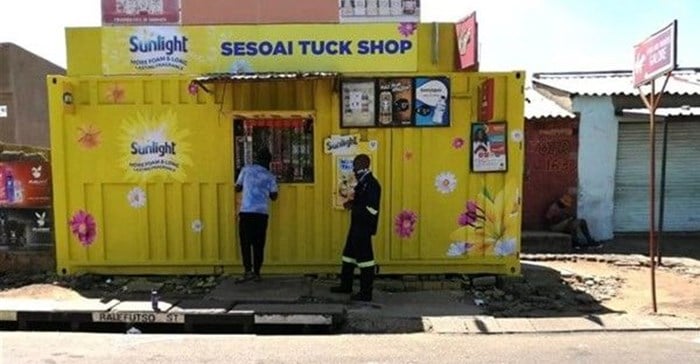
    Township delivery networks sprang up, filling the gap that Mr. Delivery was struggling to fill. Spaza shops went from strength to strength. New eateries sprang up, mimicking those found in the affluent parts of Jo’burg. These, and many other innovations provided a foundation for big brands to partner with entrepreneurs in new and exciting ways.

    Load shedding in real numbers is devastating

    However, the fairytale has been short-lived. According to a recent News24 article, since Eskom has stepped up its load shedding schedule, 66% of township businesses have had to cut jobs, with 60% unable to operate during load shedding hours.

    The implications are massive. Not only does the township economy contribute 5.2% to South Africa’s GDP, but it also employs over 2.6 million people. Load shedding in real numbers is devastating.

    Hyper-local brands

    The township economy is also built partially on a reawakened love of local brands. We’re not talking South African brands (although that’s a thing too), we’re talking hyper-local brands. As in, something your neighbour makes.

    This serves to keep cash circulating within the township, which means that one transaction enriches a long line of people, all living around you. One of the measures of a community’s wealth is the lifespan of cash within that community before it exits into the world.

    With a load shedding economy, township residents with money to spend will have to look outside the township for premium goods and luxury experiences. It’s a double whammy when load shedding and a fairly closed consumer ecosystem come to blows. Load shedding always wins.

    The one saving grace

    One saving grace is that with an increase in internet availability and a high unemployment rate, many are turning to web-based businesses to generate an income.

    According to the World Bank, a growing body of research shows that access to Wi-Fi has a positive effect on an embattled economy by providing access to global markets.

    Are global markets hungry for South African products? The international success of Maxhosa Africa proves that.

    With higher demand, stronger international currencies, and a hungry populace, the Kasi economy may be saved after all.

    We live in hope

    When it comes to things like fashion, we have the government to thank for where we are today. Nearly 15 years ago, the government instituted ridiculously high import duties on clothing in an effort to curb the influx of cheap brands from China.

    The plan was to stimulate the local fashion economy and it seems to have worked. What needs to happen next is the cutting of export taxes to support township entrepreneurs. While it would serve the country to lower both these (and other taxes), there’s been no word as to whether this will happen.

    How does this affect marketers? Well, should South Africa begin exporting locally made items (like fashion), in bulk, we may need to start understanding the international consumer a lot more. We live in hope.

  • The alignment workshop: Unearthing opportunities

    The alignment workshop: Unearthing opportunities

    In the good ol’ days, you’d make something useful, and then you’d put it on a shelf in your shop and somebody would come and buy it. You’d more than likely know that person as well. You’d be the supplier, distributor, shopfront, marketer, and customer services person all in one. You’d do all this and you’d still be home in time for dinner.

    Nowadays, things are a little more complicated. The process of getting your goods into a customer’s hands involves several teams. In my experience, very few of these teams are talking to each other.

    If you’re looking for a way to get alignment with your teams, there’s nothing better than doing an alignment workshop. What follows is a bit of an instruction guide to get you going.

    First things first, this is supposed to be fun and interactive. Everyone needs to participate, so if you see someone sitting back, invite them to give ideas or get their opinions. The fun part is that for the purposes of this kind of workshop, there’s no budget and no mandates. In other words, ideas don’t necessarily have to fall within each team’s discipline and this allows for participants to bring new perspectives to each other’s daily grind.

    You will need some A2 blank page workbooks and a bunch of post-it notes.

    Team creation

    Begin by creating teams. To run an interactive workshop with a group bigger than five is a nightmare of dominant personalities and ‘under-the-radar’ coasters. So, break them up a bit. Try to split the teams so that there is a good spread of expertise and personality in each one.

    There are two approaches to dominant personalities – put them all in one group and let them fight it out, or put one or two in each group. They both have their pros and cons, but I prefer option one because dominant personalities often become groups of one without input from others. Make sure each team has a designated scribe, a workbook, and post-it notes for ideas.

    Persona creation

    Once your teams are figured out, it’s time to begin creating personas. Personas are basically the archetypes of the kinds of customers that you serve. At the end of the day, every business is about serving a customer.

    The scribe needs to split a page up into three columns, titling them who, challenge, and opportunity. Let the teams make up people with rich personal lives, work lives and challenges, fitting all of these under their relevant columns.

    Once you get to the opportunities section, let them come up with some very broad ideas. Don’t get into detail here. You don’t need mechanics. If the idea is “a Facebook competition with a car as a prize”, that’s fine. No need to break it down further.

    At the end of the process, each team presents their personas to the rest of the room. This is for debate and crafting. This is not a competition to see who made the best personas. Keep it light.

    The customer journey

    The next step is customer journeys. Come up with three situations that a customer might find themselves in. Maybe it’s buying supplies. Maybe it’s looking for more information. For each situation, come up with what your customer may be thinking or doing. Are they stressed out? Are they phoning a lot of suppliers? Are they googling something?

    Then the ideas, as the name suggests, are where we come up with a few tactical ideas to help this customer with their thinking/doing or situation. This needs to be done for each persona and can be quite time-consuming. Gauge how many breaks are required here.

    The six in 10 approach

    Finally, there are six in 10. Six in 10 is coming up with six ideas in 10 minutes. This is a solitary activity. Each person sits with an A4 page to do this. Once they’re done, they converse with their team about their ideas and pick the top three. They then present those to the broader team.

    And you’re done. A workshop like this can take up to five hours, so make sure you can clear diaries to get it done.

    The next step is to take those personas, user journeys, and ideas and look at how feasible everything is. Compile everything into a document that you can share. By the end of the day, your teams will have understood the customer better, understood each other better, and you’ll hopefully have a few ideas on how to improve your customer’s experience.

  • The Great Return: Now is time to walk the talk

    The Great Return: Now is time to walk the talk

    Do a quick Google search and you’re going to find many articles with conflicting opinions.

    When I did a quick poll on my Linkedin page, I got a similar response. Some say that their businesses are fully remote and they’re happy about it, some say that they don’t trust their workers enough to keep them remote, noting dips in productivity.

    On the side of the workers, there is a lot of conflict too. Some miss the interactions they had with colleagues, others find the home office environment a more productive space. There are a lot more factors, but that isn’t the crux of the matter.

    The real issue

    What is the crux of the matter is that because remote work is so prevalent internationally, overseas businesses have recognised South Africa as a market ripe with cheap resources.

    To give you an example, a community manager earns around $50,000 p/a in the US. In South Africa, a similar resource will cost you R180,000 a year.

    In other words, if you’re working from home for a US business, you’re earning R800,000 a year. US businesses can pay a South African somewhat less and get the same level of competence. It’s a no-brainer.

    The ramifications are obvious. Local businesses are losing resources to international companies. It’s just impossible to compete with those kinds of salaries.

    This creates a scarcity of local staff resources, making recruitment a protracted process, putting pressure on existing staff to fill the gap.

    This in turn drives existing staff to also look for international remote work as well. It’s a self-perpetuating cycle.

    Let’s recap, you’re earning triple your salary, you’re working fully from home, and in many instances you are working shorter hours. Why would you keep working at a South Africa business?

    Fear of the unknown

    Fortunately, there is one reason, and it’s a bit of a nasty one: fear of the unknown. People are less inclined to make dramatic changes when there is very little drive to do so.

    What this boils down to is that the happier your staff, the less inclined you are to lose them. A no-brainer, right? Why is it so difficult for local businesses to get right?

    This research may be a little bit old, but in 2019 CareerJunction published a piece of research highlighting why most South Africans quit their jobs.

    Trust, approachability, favouritism, and taking credit for work done by others were just a few of the reasons given.

    Granted, compensation played a role, but it was dwarfed by the softer, more relationship-based variables.

    What is the perception that we’re so bad at people management? Is it a lack of access to cost-effective managerial courses?

    Is it the assumption that when you reach a certain age you’ll have the wisdom to lead people effectively? Perhaps it isn’t a problem that’s native to South Africa.

    I can’t tell you. What I can tell you is that if you’ve been punting the ‘people first’ narrative in your organisation, now’s the time to walk the talk.

  • The politics of platform – should your brand even go viral?

    The politics of platform – should your brand even go viral?

    Should brands trend on popular social media platforms? Should their campaigns even need to go viral to achieve brand objectives? It’s time to look at brand strategy and brand values.

    Like a mosquito buzzing around society’s collective ear, special interest groups are at it on the socials again. In the latest buzz, a firm named ‘Targeted Victory’ has implicated Meta (Facebook) in allegedly trying to undermine rival TikTok. The grievance is a series of articles and content claiming that TikTok is dangerous to children, originating from our beloved platform for the aged, Facebook.

    The only thing we know for sure is that Targeted Victory has indeed lobbied nation-wide media (US) to undermine the ByteDance owned platform and depict it as a danger to kids. There have been several innocuous trends like the #peeyourpantschallenge (self-explanatory) which have only served as an illustration of how boring lockdown can be. However, lunacy and idiocy prevail. When brands say, “let’s trend on TikTok”, I’m a little sceptical. Do you really want to trend alongside things like #poopchallenge (self-explanatory)?
    Let’s come back to brand KPIs

    I’m going to loop back to these things, but in order to do so, I’ll need my soapbox. While I’m fetching it backstage, please take the time to think about what your brand’s KPI’s are. Back. Firstly, ‘make it trend’ is the new ‘make it viral’. Agencies hear this all the time and while the phrase has changed a little, the sentiment stays the same. The sentiment being, I want a lot of people to see me, but I don’t want to pay for it. It’s a dream. Let go of it.

    Trending alongside ‘peeing your pants’ is not a strategy – creating an effective marketing-based intervention is. If you want something to trend, if you absolutely need something to trend, consider the strategic imperative here. There are ecosystems on each platform and if it makes sense to trend within these ecosystems, then do it. Otherwise, stop and make compelling communication instead. Agencies, stop promising the trend on TikTok. Brands, stop asking for the trend on TikTok.
    Take first-party data seriously

    Secondly – and this is where I climb on my soapbox – take first-party data seriously. We have put the fabric of society, our culture, our intellectualism, into the hands of tech giants. Every time you pay for an ad campaign you’re funding them. Every time you click ‘like’, you’re making them more powerful. I don’t want to come across as a heretical, social-media is-trash type person, but seriously, look at the politics. And actually, I do want to come across as that person, somebody needs to. There’s millions at stake here and they’re employing every nasty trick in the book to control their commodity. Their commodity is you, their commodity is your customer. First-party data is your liberator. When you get it, your customer has bought into you, you’ve got a direct line of communication. Sure, you’ve still got to use some of these platforms to get them there, but once they’re there, they’re there. All you need is a compelling reason for people to buy into your brand. A value exchange, something that will matter to them. Sometimes it’s just your product or service, sometimes it’s something a little more like a bit of useful content. Whatever that ‘thing’ is (and I don’t care, as long as you do), get that first-party data!

    Alright, I’m stepping off my soapbox. I’ll finish with a plea, please stop empowering the bad guys.

  • Digital Marketers don’t forget to look up

    Digital Marketers don’t forget to look up

    In 2021 we released our very first Township CX Report. It went well. It wasn’t a spectacular success, but it was good enough to motivate us to do it again in 2022. This time around, we wanted it to be bigger and better.

    An injection of authenticity

    We decided that part of the bigger and better was an injection of authenticity. It’s one thing to see some data on a spreadsheet, but it’s quite another to go to where the people are. To sit with them, to talk about their experiences, to connect. We chose three townships, Alexandra, Soweto, and Katlehong, and we planned our expedition.

    I call it an expedition because, for me, it was. If you can’t tell by my profile picture, I’m white. I’m suburban in every sense of the word. A trip to a township is not an everyday occurrence for me. It’s a thing. It’s an expedition. It’s new and alien and daunting. What is every day for most of South Africa, is not every day for me. In many ways, I’m a tourist in my own country. And that’s not okay.

    2021 was not a great year for South Africa. Covid-19, the riots, and a bunch of other things led me to believe that this country was in dire straits. I didn’t hold much hope. I expected our township visits to be depressing. I expected to see economic hardship, strife, and suffering. Sure, some of that was there. But there was also something else.

    A masterclass in entrepreneurship
    In Soweto we saw spaza shops and restaurants rebranding to their own unique look-and-feel. A shift away from the branded cold-drink signs we’ve seen so often. No, they had their own brand identities. We saw entrepreneurs coming up with new and innovative ideas, from bespoke food delivery services to unheard of financial services.

    If you want to attend a master class in entrepreneurship, downtown Alex is where it’s at. In Katlehong we met a man that has managed to connect spaza shops together through his distribution network, all while inventing a cold drink that’s just as healthy as it is delicious.

    In a way, 2021 was a blazing inferno, burning through the lives of South Africans, leaving ruin in its wake. But entrepreneurship and innovation were birthed in that fire, and they rose like the proverbial phoenix, carrying the township economy upward with it.

  • #NEXT2022: Will it be a festive season?

    #NEXT2022: Will it be a festive season?

    I am certain that many of you are experiencing the end of the year ‘throw in the towel’ blues at the moment. It’s been a long one, full of ups and downs. The struggle has been real. But there’s one more hurdle to overcome from a consumer point of view: the big festive season shop. The question is, what will it look like this year and how can we make sure we benefit?

    During the Covid Christmas period in 2020, South Africa was in the middle of a retail downturn and the Christmas sales reflected that. On average there was a 12.5% decrease in sales compared to 2019. If history repeats itself, retailers are in for a very bleak festive season. However, Black Friday’s performance has been better than previous years, but it isn’t the brick-and-mortar stores that will benefit from these changes. The upswing in sales came mostly from the online space.

    New behaviour is here to stay

    There has been a split opinion about post-lockdown behaviour. During the worst of lockdown, many were forced into the online space to make not only their big-ticket purchases, but also their grocery purchases. For some consumers, this behaviour became solidified as retailers rose to the occasion by sharpening up their customer experiences. Others believed that people would revert back to their old ways, but the reality is quite different. The behaviour has stuck.

    Get on ecommerce now

    There is an obvious takeaway – if you’re not selling your goods on ecommerce, you’re missing out on a massive opportunity. There is a not so obvious takeaway. Internationally, consumers are looking for consolidated shopping experiences. The reason for the popularity of platforms like Amazon, is that there is an exceptionally broad range of products. Consumers can visit a single website and have access to a vast number of product categories. Coupled with Amazon’s Alexa, repeat purchases are a breeze. Consumers are locked into repeat buying, and they don’t mind because it frees up time and is almost the definition of convenience.

    We’re experiencing a very similar trend rising here with our very own Takealot. You don’t need to build your own ecommerce enabled site, and even if you have, it’ll serve you well to make sure that your products are available on the big product aggregator sites.

    Social shopping – a viable alternative

    Social shopping is also seeing rapid growth. There are a few reasons for this:

    1. The social aggregator. As I mentioned earlier, the consumer is moving more and more to single space shopping platforms. There is no better single space shopping platform than social media.

    2. The recommendation factor. Consumers have lost all trust in brand messaging (and I don’t say that lightly); and are now looking to friends and family for product recommendations. Social media is primed for these kinds of recommendations, and these social shopping integrations bring social marketing and retail one step closer together.

    3. Attribution. One of the big conundrums with social advertising has been the conversion conversation. For marketers, social media is seen as a set of awareness platforms. Social shopping makes clear attribution reporting possible on platforms like Facebook.

    Bottom-line, behaviours have changed. We need to change with them. While you may not be ready for this festive season, make sure 2022 doesn’t have you relying solely on your physical store.

  • The ‘rules’ of great creative execution

    The ‘rules’ of great creative execution

    I’ve spent the last few months working on several NGO marketing strategies. It’s been absolutely fascinating, mostly because media budgets in that space are incredibly small so compelling creative becomes exceedingly essential. We all know that creative plays a pivotal role in any marketing effort. Still, the insights that I’ve come across in the NGO space illustrate that our creative concepts and structures in other areas are still in their infancy. In this ‘new normal’ world, it is even more important to put resonant creative in front of the consumer.

    There is a fascinating whitepaper that you can read here, but if 52 pages of research is too much, I’ve summarised the findings and adapted them for the retail space, specifically focusing on digital channels.

    Creative matters more than you know

    Correctly framing your marketing messages can lead to a 300% increase in conversion rates. I found this insight to be gobsmacking. Setting up audiences are critical, and human insights should drive big ideas, but what this insight alludes to is the fact that creative structure (how creative actually leads the eye and plays in the space of colour theory), can make or break your conversion rate.

    People need to see themselves

    The research shows that if the consumer sees ads featuring relatable models, conversion rates can increase by 50%. Firstly, this means that you need to understand your target audience in the most fundamental way. You may be selling toothpaste, but if your ad models are dressed in the latest designer fashions, you’re going to lose your audience. It also casts doubt on the effectiveness of ads featuring overly attractive individuals. Secondly, and more technically speaking, we need to make sure that we’re actually targeting the right individuals. In other words, our marketing personas and our digital media audiences need to overlap.

    Don’t overwhelm

    Let’s say you’re running a promotion across a category of items. The temptation is to try and do a mass burst of various products or worse still, cram as many of the products as possible onto a single banner. Despite all its cleverness, the human brain tends towards single subject processing. It means that you’re really only able to focus on (and comprehend properly), one thing at a time. Advertise with your flagship product only, and you’re bound to see improvements in conversion.

    A picture is worth a thousand words

    It’s a throwaway saying that we use to describe the immediate impact of a visual over the comparatively more laborious task of reading a bunch of copy. I think there’s a powerful insight in that saying though. How is the audience’s eye being led through the imagery? Top-to-bottom? Left-to-right? How are you positioning your elements, your copy? Are you unpacking your message in the form of a narrative, or are you simply bombarding the consumer’s eye, giving them the equivalent of a creative smack?

    I was sitting with our creative director the other day looking at how we construct a key visual to deliver maximum impact. We decided that our image would convey a story, albeit with no context, and the final piece of copy on the page would create the context. It would be a eureka moment, a surprise to the viewer, and make a far stronger emotional connection.

    There you have it. Creating good marketing collateral is more than just slapping some pretty copy on to brand CI; it is a strategic endeavour which has far-reaching consequences if not done properly. Good creative teams have a feel for it, but for the rest of us, these are the guidelines we can follow.

  • CX moments of truth

    CX moments of truth

    How many businesses actually go through the exercise of determining where their customer’s pain points are? I was fortunate enough to have the opportunity to work on a very interesting pitch for a popular automotive brand. Part of the task was to map out the entire customer experience. The point of the process was to determine where the brand should focus their efforts (and their budget) in the coming months.

    We conducted some interviews, including those in the market for new cars, and salespeople on the dealer floor, and built personas. We then broke down the journey into five key milestones, mapping out what each persona would be thinking, doing, and feeling. We determined the tools and experiences that would address any pain points, and then looked at whether those tools and experiences already existed. If they didn’t, these became the recommendations. The results it yielded were clear and gave the potential client some deep insights into where they could improve. Like many brands today, some areas of the customer experience were second to none, and some were almost non-existent.

    Content and marketing are not everything

    Many brands are obsessed with content. Visit any brand site or social page, and you’ll find content galore. Videos, infographics, long-form and short-form. Yet, time and time again, the consumer has made it abundantly clear that they’re not particularly interested in hearing from brands. In fact, recent research shows that on a scale of impact, reviews and recommendations from friends and family far outweigh brand messaging.

    Back to our CX audit. As I mentioned, there were gaps and drops in the customer experience, but none of those gaps were content issues. They were all to do with dropped balls and poor experiences at a multitude of real world and digital touchpoints. Boots CMO, Pete Markey, was recently quoted as saying: “Your customer experience is your brand, so focus on getting it right consistently.”

    Marketing moments of truth that matter

    Therein lies the real challenge – being consistent across the board. How much effort are you putting into your marketing vs. your customer’s experience? In a recent CX report published by Rogerwilco, we took a look at the moments that mattered, ranking them by importance to the customer. These moments of ‘truth’, when done well, act as marketing channels all on their own, earning positive reviews that count more than a brand’s self-praise. Surprisingly, moments like unboxing and delivery (in the ecommerce space), were far more important than the search and purchase phases. Many ecommerce brands tend to focus on the search and purchase phase, while neglecting these final phases.

    Ask the right questions

    The questions you need to ask yourself are, which phases in my customer’s  journey am I ignoring? Have I mapped my customer’s moments of truth? Have I taken time to strategise and understand my customer, or am I simply ploughing ahead with creating content and marketing that has no value? I would also implore you to stop using the term ‘audience’. You don’t have one. You have a customer. Start focusing on the things that matter to your customer.

  • Shifting retail habits in SA consumers

    Shifting retail habits in SA consumers

    Marketing influences and retail habits are shifting in the pandemic, and in South Africa’s townships, cash and printed marketing messages still count. These observations are from the 2021 South Africa Township Marketing Report with Rogerwilco and Survey54, which looks at the factors that influence consumer’s decisions in the township environment.

    Cash is still king

    South Africans still carry cash, with a whopping 80% of respondents preferring it over other payment methods. There are two strongly held beliefs here: firstly, bank charges are way too high (not entirely true). Secondly, cash is untraceable, so the taxman won’t take it from you. Abdullahi Ibrahim, treasurer of the Somali Community Board of South Africa, whose organisation represents the interests of many spazas and informal traders, maintains that a majority of his members would prefer if their customers paid with cards or e-wallets.

    With many respondents using their bank accounts only two or three times a month to withdraw their salaries, there are people out there walking around with fairly substantial sums of money in their pockets. Not ideal for them, not ideal for traders. Breaking the cash habit is going to be hard work, but there are benefits for both the retailer and the consumer.

    Retailers: 1, Spaza’s: 0

    Spaza shops have been a mainstay in townships since the 1970s, and while they are still a go-to shopping choice, their popularity is declining. COVID-19 has exacerbated existing issues that consumers face when shopping at a spaza shop. Price has always been a consideration, but many consumers are willing to pay the higher price in exchange for the convenience of having a friendly neighbourhood store. Expired stock is also a long-standing issue, made worse by less foot traffic during COVID-19’s lockdowns.

    These problems have caused the township consumer to re-think their loyalties, and retailers are shifting up the preferred shopping list. The fall of the spaza could be detrimental to SA’s economy, with spaza’s contributing 5.2% to SA’s overall GDP and offering employment to 2.6 million people.

    The opportunities are endless here, but one that springs immediately to mind is a white labelled loyalty programme that could bring the township resident into the loyalty cycle while providing a secure future for the local spaza shop.

    Marketing influences

    The last point I’d like to touch on is our respondent’s most trusted sources of product information. Advocacy from friends and family is number one. A good rule of thumb for marketers is this: you’re not talking to an individual, you’re talking to a family. There is an ecosystem there and getting your brand into those conversations is going to require an understanding of all its participants. In second place (and maybe surprising for some) are newspaper inserts. Many marketers are turning to social media to reach this market, but the sweet spot still lies in print.

    There are many other topics, ranging from attitudes towards fake goods, ecommerce, and side hustles. The takeaway here, is that if this is your audience, you may know less about them than you think.

  • Retail futures from Google Marketing Conference

    Retail futures from Google Marketing Conference

    Google recently aired its Google Marketing conference. The event was a detailed look at the future of online retail, finance, and advertising. Insights, there were aplenty. I’ve taken some notes, focusing on the future of retail. I highly recommend that you go and watch the videos yourselves, there’s a lot of food for thought in them.

    When COVID-19 kicked off, there was a lot of speculation around the ‘new normal’, what trends would remain, and what trends wouldn’t. Here we are, a year later, and there appears to be some stickiness on some of those trends. The retail team at Google has started examining these trends more closely.

    Unpredictability

    Sales will remain unpredictable – 15% of all Google searches are new. People are spending more time at home, and with that comes certain behaviours. I know, as I’ve been spending a lot of time in my study, using it as my office. I’ve had to get a second screen, increase my desk space, and organise a bundle of cables leading out of the various PCs that I own. I wouldn’t have been bothered by any of this if I wasn’t spending so much time in this room. The thing is, this behaviour is completely unnatural for me. If you told me a year ago that I’d be buying leather chairs to turn the spare room into a library, I’d tell you that you’re mad. It turns out that my forays into interior design and neatening up my spaces are not unique to me.

    There’s also been an increase in clothing sales of tops, but not bottoms. How many of us are sitting in pyjama pants right now? The fact that 15% of Google searches are new, means that people are starting to think differently. They’re looking for inspiration, for ways to make their lives better in the new context they find themselves in. We’ve never seen this before. Sales have become unpredictable.

    Convenience

    Consumers have three big priorities. Stock and delivery times are the first two. If your business is struggling to keep stock or your delivery times are not great, you had better fix that. Those two issues are damaging your brand, which in turn will damage your repeat business (and perhaps even new business if word gets out). We’ve always known that people have an affinity towards brands that share their ideals.

    The third consumer priority takes this into account. As part of this drive towards convenience, consumer searches show a 71% increase in usages of terms like “sustainable”, “ethically sourced”, etc. This has always been a background trend, but it is becoming more prominent and I am aware of several businesses that have taken note and are beginning to take sustainability a lot more seriously.

    Data

    Data has always been important, we know it, and many of us spend a lot of time looking at it. But how we use data needs to change. Sajal Kohli, senior partner and head of global retail at McKinsey has said that businesses need to gear themselves for “much shorter planning horizons”. So, if you’re planning your business activities on a one year timescale, you need to stop. Start planning your launches, promos, and campaigns on a quarterly or even monthly time frame. The data is there and you have the insights. Your business needs to become far more agile to account for the unpredictable environment we find ourselves in.

    This should have been the approach to business the moment we had access to the volumes of data that we have access to. But for some reason we stuck to our old ways. Covid is forcing our hand and we need to adapt quickly.

    Loyalty programmes

    I’ve talked about loyalty programmes before in this forum, so I’m not going to go into this in too much detail. The bottom line is, have a good one, and make retention and repeat shops a priority.

    I know that the ‘new normal’ conversation has been done to death. I’m also aware that a lot of the stats I’ve presented above are US-based. I don’t think it matters. This isn’t about Covid, this is about solid retail business practices. The things that the team at Google are telling us, are not new and wonderful insights. We’ve known these things all along.

    Be agile, focus on data and insights, and put your customer first. These conversations have been around for years. Covid or no Covid, the pressure is on, and we need to start putting these principles into play.