Tag: life

  • Load shedding: Forcing the township economy to go international?

    Load shedding: Forcing the township economy to go international?

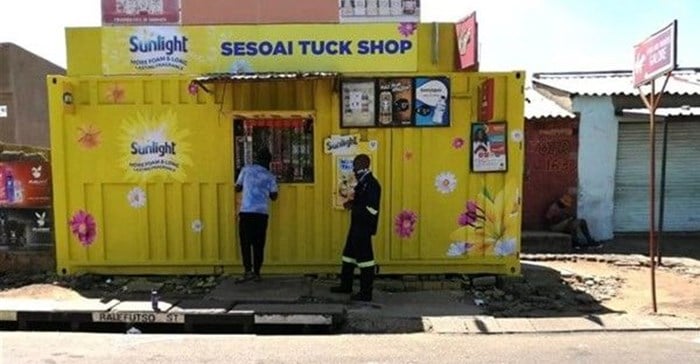
    While the protests in 2021 were expected to bring the Kasi economy to its knees, quite the opposite happened. Entrepreneurs who had cut their innovation ‘teeth’ during Covid faced the new challenge head on.

    Township delivery networks sprang up, filling the gap that Mr. Delivery was struggling to fill. Spaza shops went from strength to strength. New eateries sprang up, mimicking those found in the affluent parts of Jo’burg. These, and many other innovations provided a foundation for big brands to partner with entrepreneurs in new and exciting ways.

    Load shedding in real numbers is devastating

    However, the fairytale has been short-lived. According to a recent News24 article, since Eskom has stepped up its load shedding schedule, 66% of township businesses have had to cut jobs, with 60% unable to operate during load shedding hours.

    The implications are massive. Not only does the township economy contribute 5.2% to South Africa’s GDP, but it also employs over 2.6 million people. Load shedding in real numbers is devastating.

    Hyper-local brands

    The township economy is also built partially on a reawakened love of local brands. We’re not talking South African brands (although that’s a thing too), we’re talking hyper-local brands. As in, something your neighbour makes.

    This serves to keep cash circulating within the township, which means that one transaction enriches a long line of people, all living around you. One of the measures of a community’s wealth is the lifespan of cash within that community before it exits into the world.

    With a load shedding economy, township residents with money to spend will have to look outside the township for premium goods and luxury experiences. It’s a double whammy when load shedding and a fairly closed consumer ecosystem come to blows. Load shedding always wins.

    The one saving grace

    One saving grace is that with an increase in internet availability and a high unemployment rate, many are turning to web-based businesses to generate an income.

    According to the World Bank, a growing body of research shows that access to Wi-Fi has a positive effect on an embattled economy by providing access to global markets.

    Are global markets hungry for South African products? The international success of Maxhosa Africa proves that.

    With higher demand, stronger international currencies, and a hungry populace, the Kasi economy may be saved after all.

    We live in hope

    When it comes to things like fashion, we have the government to thank for where we are today. Nearly 15 years ago, the government instituted ridiculously high import duties on clothing in an effort to curb the influx of cheap brands from China.

    The plan was to stimulate the local fashion economy and it seems to have worked. What needs to happen next is the cutting of export taxes to support township entrepreneurs. While it would serve the country to lower both these (and other taxes), there’s been no word as to whether this will happen.

    How does this affect marketers? Well, should South Africa begin exporting locally made items (like fashion), in bulk, we may need to start understanding the international consumer a lot more. We live in hope.

  • Being critical about criticism

    Being critical about criticism

    For around four years in my career, I worked with the most hypercritical executive creative director I had ever met. She would make her team members cry in an effort to get the best work possible out of them. At first, I was appalled. What an awful, awful human being, I thought. She stalked around, checking work, tweaking, changing, updating. How nit-picky and over the top. How horrible, how awful. I would avoid her, fearing that she would criticise my very existence.

    Then one day, the office was rearranged. For my sins, I was forced to share a desk with her. So, I did what any sane person would do, I tried to make friends. I was surprised to find that she was an incredibly warm and open human being. After several weeks of sitting opposite her, I realised that her criticisms were not self-indulgent displays of power. She was sitting on a wealth of knowledge, of experience and the best way to transfer this knowledge was through pointing out the issues in the work of her team and giving them direction. Her criticisms were valid. She gave genuinely good reasons for why she wanted changes. She pushed because she understood that most people don’t reach their full potential without an occasional kick in the you-know-what. Her team was thriving and they respected her (other than the one or two). They sought out her criticism, knowing that it made them better at their jobs. My perception changed and I began to learn.

    I’m no creative director, but I can recognise good work when I see it now. I have eyes, whereas before I was blind. I used to look at designs and if the words made sense, I was fine with it. But, just by being in the general vicinity of the ‘hypercritical’ creative director, I learned what to look for in those designs and ideas. It was one of the most important learning experiences I’ve ever had. Here is my point: criticism is absolutely vital. Everything should be approached with a critical eye. Everything. If you’re letting things slide because you feel sorry for the person generating the work, you’re missing out opportunities to help them grow. If you’re letting things slip because you’re tired or you couldn’t be bothered, maybe you shouldn’t be doing what you’re doing.

    Criticism is the bedrock of growth. If you don’t know what’s wrong, how will you ever know how to fix it? There is a caveat. Just as criticism is good, it can also be used for evil. I have seen work being criticised for no real reason other than to appease ego or play a political game. A good criticism is backed by a fundamental understanding of the process, a wealth of experience, and a helpful pointer in the right direction. The egotistical criticisms have none of the above. Dare I say it, ignore where possible.

    Accountability

    What has prompted this article? Well, criticism and accountability go hand-in-hand. As a team lead, CEO, or manager, your ability to provide strong constructive criticism is the same as delegating responsibility and accountability. Criticism is the package in which responsibility and accountability are wrapped. If you do not criticise, or you are unable to articulate your criticisms in a useful and constructive way, the people working under you will lack direction. A lack of criticism means a lack of accountability.

    In news more relevant to digital marketing, Facebook just walked away from the negotiation table during the Australian government’s bid to get them to pay publishers every time an article was shared. Why could Facebook comfortably do that? The criticism of their platform was unfounded and poorly backed. Let’s not talk about how Google capitulated though. I could list off countless other examples, but the lesson is, criticise, and criticise well my friends. Your business may depend upon it.

    Main image credit: Photo by Volodymyr Hryshchenko on Unsplash.