Tag: covid

  • Load shedding: Forcing the township economy to go international?

    Load shedding: Forcing the township economy to go international?

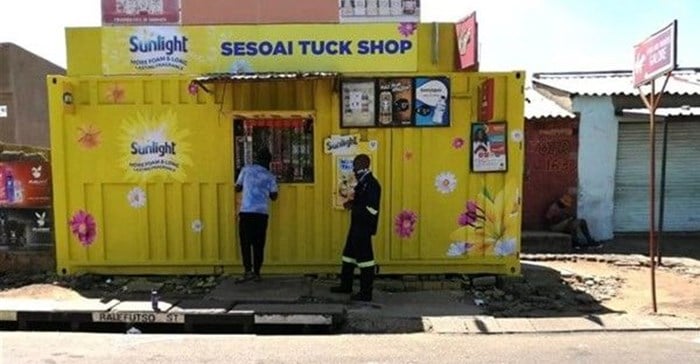
    While the protests in 2021 were expected to bring the Kasi economy to its knees, quite the opposite happened. Entrepreneurs who had cut their innovation ‘teeth’ during Covid faced the new challenge head on.

    Township delivery networks sprang up, filling the gap that Mr. Delivery was struggling to fill. Spaza shops went from strength to strength. New eateries sprang up, mimicking those found in the affluent parts of Jo’burg. These, and many other innovations provided a foundation for big brands to partner with entrepreneurs in new and exciting ways.

    Load shedding in real numbers is devastating

    However, the fairytale has been short-lived. According to a recent News24 article, since Eskom has stepped up its load shedding schedule, 66% of township businesses have had to cut jobs, with 60% unable to operate during load shedding hours.

    The implications are massive. Not only does the township economy contribute 5.2% to South Africa’s GDP, but it also employs over 2.6 million people. Load shedding in real numbers is devastating.

    Hyper-local brands

    The township economy is also built partially on a reawakened love of local brands. We’re not talking South African brands (although that’s a thing too), we’re talking hyper-local brands. As in, something your neighbour makes.

    This serves to keep cash circulating within the township, which means that one transaction enriches a long line of people, all living around you. One of the measures of a community’s wealth is the lifespan of cash within that community before it exits into the world.

    With a load shedding economy, township residents with money to spend will have to look outside the township for premium goods and luxury experiences. It’s a double whammy when load shedding and a fairly closed consumer ecosystem come to blows. Load shedding always wins.

    The one saving grace

    One saving grace is that with an increase in internet availability and a high unemployment rate, many are turning to web-based businesses to generate an income.

    According to the World Bank, a growing body of research shows that access to Wi-Fi has a positive effect on an embattled economy by providing access to global markets.

    Are global markets hungry for South African products? The international success of Maxhosa Africa proves that.

    With higher demand, stronger international currencies, and a hungry populace, the Kasi economy may be saved after all.

    We live in hope

    When it comes to things like fashion, we have the government to thank for where we are today. Nearly 15 years ago, the government instituted ridiculously high import duties on clothing in an effort to curb the influx of cheap brands from China.

    The plan was to stimulate the local fashion economy and it seems to have worked. What needs to happen next is the cutting of export taxes to support township entrepreneurs. While it would serve the country to lower both these (and other taxes), there’s been no word as to whether this will happen.

    How does this affect marketers? Well, should South Africa begin exporting locally made items (like fashion), in bulk, we may need to start understanding the international consumer a lot more. We live in hope.

  • ‘Techceleration’ – a recurring phenomenon

    ‘Techceleration’ – a recurring phenomenon

    I’m sure we’re all familiar with World War 2, Hitler, Churchill, and all of those other historical tidbits. What you may not be familiar with is the huge technological leaps that we made during that period. Things like radar, atomic energy, advances in penicillin, and leaps forward in computing  came out of a pressing need to innovate, to stay one step ahead of an ever advancing enemy.

    It is not a once-off phenomenon. All throughout human history, techceleration has happened during times of duress. The black death plague kicked off our foray into medicine (and for some reason watches were also invented then); early wars kicked off our horse riding (the dressage you see today was how a soldier would demonstrate his horse-riding skills).

    COVID-19, our techcelerator

    COVID-19 is no different. It has placed us under immense duress, but at the same time it has encouraged a massive amount of innovation. Things like working from home, something which in the past was an activity filled with bureaucracy and pleading, has become the norm. Products like Zoom saw an increase in sales of 326% in 2020, and there are similar trends present in the food delivery service, medicine, and  e-learning.

    But what does that mean for you? Experts have postulated that COVID-19 has techcelerated us at least five years into the future. What you’re seeing in 2021 should only have happened in 2026. The question then becomes, how will you advance your business by five years?

    Trendwatching

    While most innovation seems like it comes out of the blue, the reality is that it’s usually been part of a trend that was taking its time. For example, we’ve been talking about work-from-home for decades now. It’s been a trend that’s been in the works, COVID-19 just sped it up. We’ve noted similar trends in the online space. eCommerce was a trend that was being slowly adopted, but with the arrival of COVID-19, 96% of a sample of 2,000 people said they were planning to spend more online in the coming year.

    Become your own futurist

    Taking out your magnifying glass, what are the trends that you’ve been sitting on in your own business? There are many things that have changed. Thanks to flexible working hours, customers are now shopping at sporadic times of the day. The Saturday morning rush has begun to dissipate. Customers are starting to see shopping as a day out, a break from the house, and so dwell times are increasing. Overseas, retailers are partnering with coffee and fast food brands to leverage these longer dwell times by providing snacks and beverages instore.

    Augmented reality has also resurfaced with a major deal between WPP and Snapchat having just been signed off. WPP clients will now have access to AR technology, opening up new platforms and tools for their customers.

    If you have not been paying attention to the trends within your own business, now is as good a time as any to start. Trends will continue to accelerate and if you don’t meet them head on, the results could be costly.